


The Real Cost of Slip-and-Fall Accidents in Illinois — And How a Mat Rental Program Pays for Itself
- March 31, 2026
- Uncategorized
- specialtymat
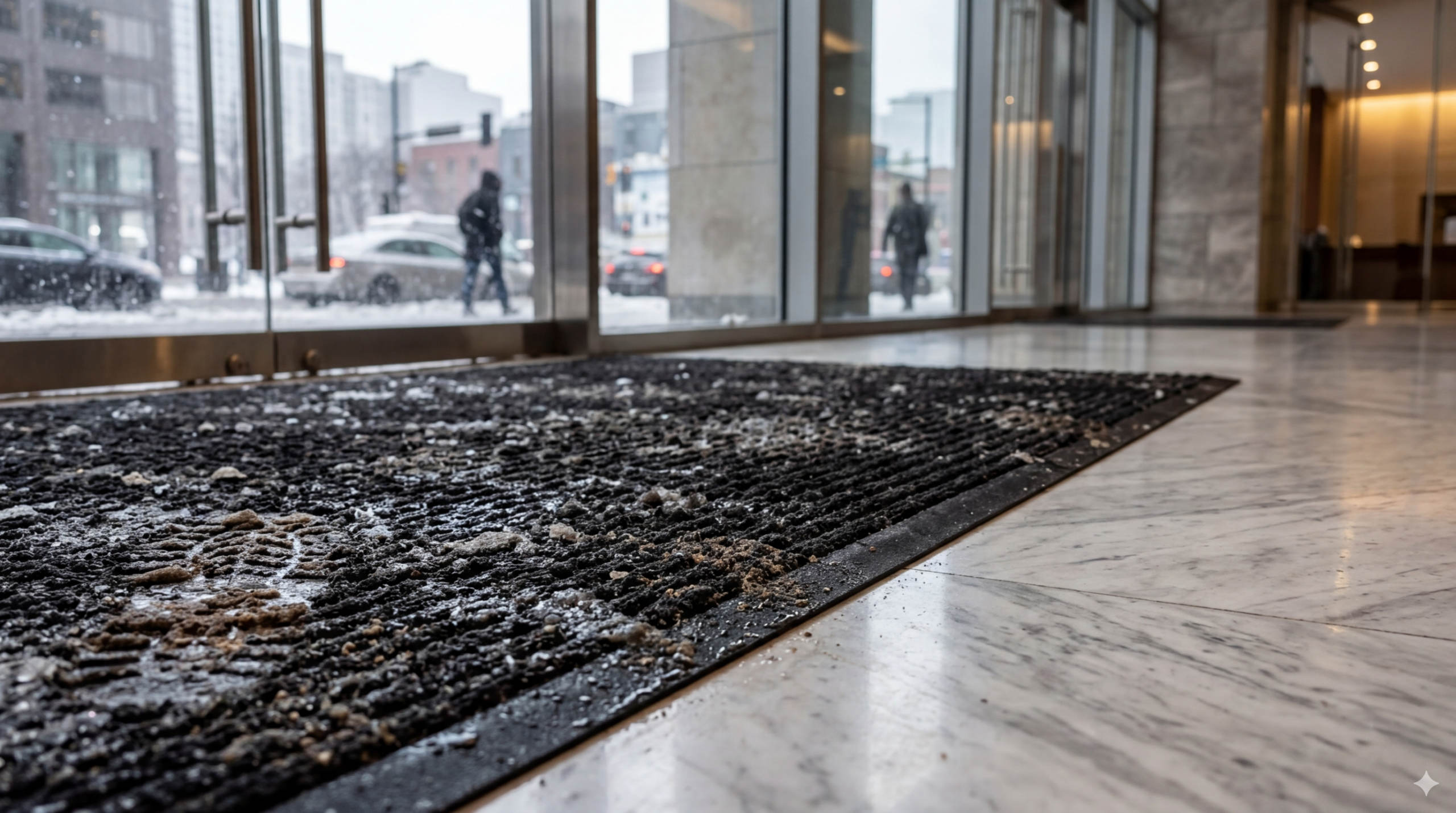
Slip-and-fall accidents cost U.S. businesses over $70 billion annually in direct and indirect expenses. For facility managers in Illinois, this risk isn’t abstract—it’s seasonal, predictable, and financially material. Months of snow, salt, and ice melt create hazardous walking surfaces that increase both incident frequency and liability exposure.
For operations leaders managing OSHA compliance and tight budgets, slip prevention is not a “cleaning expense”—it’s a controllable cost center. A commercial mat rental program is one of the most cost-effective ways to reduce risk. Below is a breakdown of the actual financial impact—and why renting mats consistently outperforms buying them.
What Does a Slip-and-Fall Accident Actually Cost?
The financial exposure from a single incident is significant and often underestimated:
- Average medical and legal cost per slip-and-fall injury: $12,000
- Average cost to defend a slip-and-fall lawsuit in court: $50,000
- OSHA penalties for inadequate walkway surfaces (29 CFR 1910.22): up to $15,625 per violation
- Workers’ Compensation claims related to slip injuries in Illinois manufacturing: 23% of all claims
Context: For a business generating $2M in annual revenue, a single uncontested claim represents approximately 0.6%–2.5% of total revenue in direct losses—before factoring in insurance premium increases or operational disruption.
How Illinois Winters Amplify the Risk
Illinois averages 28 inches of snowfall annually in the Chicago metro area. From November through March, facilities operate in a high-risk environment where snow, salt, and moisture are constantly tracked indoors.
Wet, contaminated floors are 5× more likely to cause slips than dry surfaces. Without an effective matting system:
- Custodial staff spend up to 39% of their time on floor care
- Indoor flooring lifespan decreases by 30–40% due to abrasive debris
- Liability exposure peaks during winter months
This is not just a safety issue—it’s a measurable operational inefficiency.
The ROI Math on a Commercial Mat Rental Program
For a mid-size Illinois facility (~50 employees), the numbers are straightforward:
- Annual mat rental program cost: $1,800–$3,600/year
- One slip-and-fall accident (medically treated, no lawsuit): $12,000
Break-even point: approximately 3–4 months of rental cost.
Even before factoring in additional savings:
- Reduced custodial labor (a 15-foot mat captures ~80% of tracked-in debris)
- Extended floor lifespan ($4–$8 per sq ft replacement cost)
- Lower Workers’ Compensation premiums
The return on investment is typically 3–5× in the first year alone.
Rent vs. Buy — Which Makes More Sense for Your Facility?
When comparing total cost of ownership, renting consistently delivers stronger financial and operational outcomes:
| Factor | Buying | Renting (Specialty Mat) |
|---|---|---|
| Upfront cost | $150–$500 per mat | $0 |
| Laundering | Your cost + labor | Included weekly |
| Replacement | Your cost | Included |
| NFSI certification | Not guaranteed | Included |
| Liability documentation | None | Program records available |
Buying shifts responsibility—and risk—onto your team. Renting transfers it to a managed service with built-in compliance support.
OSHA Compliance: What Illinois Facility Managers Must Know
Under OSHA General Industry Standard 29 CFR 1910.22(a)(1), walking-working surfaces must be “maintained in good repair” and kept clean and dry. This is one of the most frequently cited violations in Illinois facilities.
A documented mat rental program helps demonstrate compliance by providing:
- Regular service records (weekly laundering and replacement)
- Use of NFSI-certified slip-resistant mats
- Consistent floor protection during high-risk conditions
This creates a verifiable paper trail—critical in the event of an inspection, claim, or litigation.
How Specialty Mat Serves Illinois & Indiana Facilities
Specialty Mat Services supports facilities across the Illinois service area—from Aurora to Chicago, Naperville to Indianapolis—with a fully managed mat rental program designed for safety, compliance, and cost control.
The program includes:
- Weekly delivery and laundering
- Over 200+ mat styles, including NFSI-certified entrance mats, anti-fatigue mats, and logo mats
- Zero upfront cost
- Expert guidance through a free facility analysis
This is not just a product—it’s an operational safeguard built into your facility workflow.
Schedule Your Free Facility Walkthrough
The cost of inaction is measurable—and avoidable.
Schedule Your Free Facility Walkthrough today through our free facility analysis and identify exactly where your facility is exposed.


 Infinite Laundry